中国梦之声
国安部披露一起泄密事件_我的网站

A |
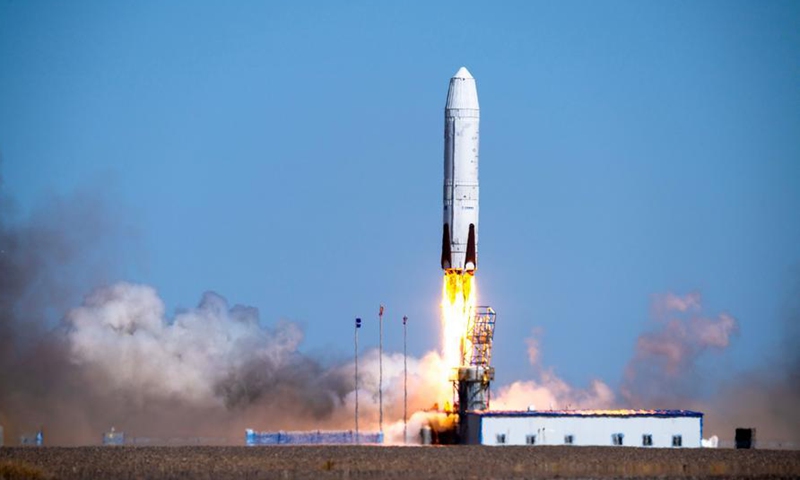
This photo shows the reusable rocket Nebula-1, developed by Chinese private rocket company Deep Blue Aerospace, blasting off during a high-altitude vertical recovery flight test in north China's Inner Mongolia Autonomous Region, Sept. 22, 2024. (Deep Blue Aerospace/Handout via Xinhua)
China's commercial reusable launch vehicle sector continues to make steady progress, as a company announced on Friday that it had completed a long-duration test firing of an engine for a large recoverable carrier rocket.
Deep Blue Aerospace, a commercial space startup based in Wuxi, east China's Jiangsu Province, said it recently completed a 100-second static-fire test of its Thunder-RS engine, a 130-tonne-class liquid-oxygen kerosene engine designed for the company's large reusable rocket, Nebula-2.
The test reached 1,297.5 kilonewtons of thrust, or about 132.3 tonnes. The company said multiple short-duration test firings had been conducted previously to evaluate engine performance, with no anomalies recorded.
The recent 100‑second run was the engine's first crossing of that steady‑state duration threshold, serving as a comprehensive verification of its performance, the company said.
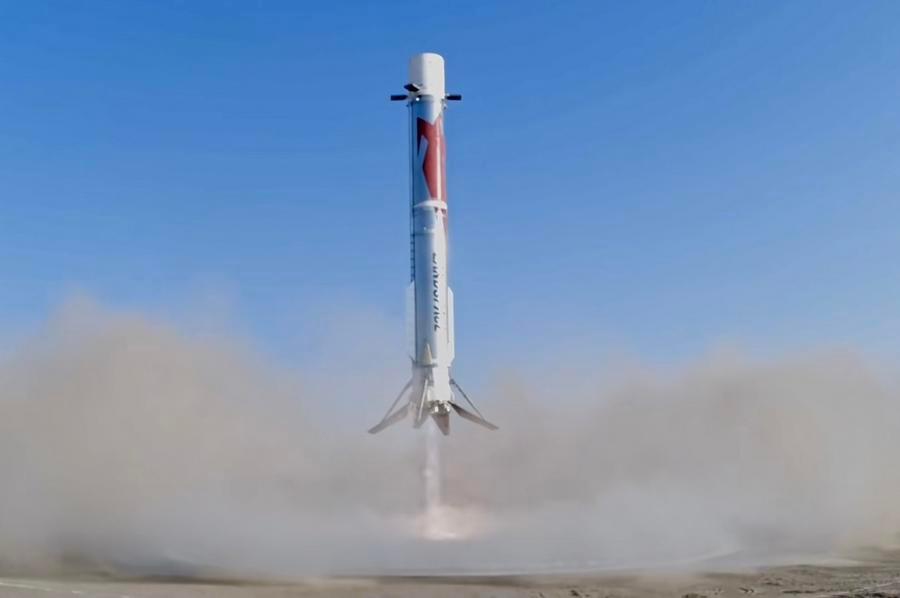
This screenshot from a video clip shows the first stage of the Zhuque-3 Y2 rocket making its land-based recovery, Aug. 19, 2026. (LandSpace/Handout via Xinhua)
Rocket reusability can greatly cut launch costs and boosts launch frequency, making it key to achieving large-scale, routine access to space.
China launched the reusable rocket Zhuque-3 on Wednesday morning, achieving its first recovery of a rocket's first stage on land, marking the country's first successful land-based recovery. This mission followed the successful sea-based net recovery of the Long March-10B's first stage on July 10.
More models of Chinese reusable rockets are scheduled to conduct tests this year.
。 近日,国家安全机关在侦办某反间谍工作案件时,依法向某单位进行司法查询。该单位经办人员李某发现被查询对象是自己认识的人,自以为出于好心,想着给对方送个人情,便私自向被调查对象发送了查询截图,其中涉及部分敏感信息,可能对案件侦办造成不良影响。由于国家安全机关处置及时,消除了相关影响。国家安全机关依法对李某给予行政警告处罚,并将行政处罚决定通报其所在单位,建议其所在单位给予相应内部处分。在国家安全机关干警的严肃教育下,李某深刻认识到自己故意泄露反间谍工作国家秘密的错误违法行为。这起泄密事件的发生,也暴露了李某所在单位落实反间谍安全防范工作的主体责任不到位,在敏感系统管理、保密安全防范等制度落实上存在失职失责,反间防谍和失泄密隐患突出。对李某作出行政处罚决定后,国家安全机关依法对李某所在单位进行了反间防谍安全风险提醒和责令整改,并与有关部门联合发文压实责任,要求进一步明确做好涉国家安全等有关工作司法查询的保密工作。国家安全机关提示反间防谍工作,不仅需要国家安全机关发挥专门作用,还需要全社会的广泛动员、共同参与。公民或者组织都有可能因配合国家安全机关工作等原因了解到有关国家秘密、工作秘密,相关知密人员应当履行法律规定的义务,严格保守秘密,绝不能自以为只是透露点消息、卖个人情的小事,因小失大,对国家安全造成危害。——配合开展工作,严守国家秘密。《中华人民共和国反间谍法》规定,任何公民和组织都应当依法支持、协助反间谍工作,保守所知悉的国家秘密和反间谍工作秘密。泄露有关反间谍工作的国家秘密,构成犯罪的,依法追究刑事责任;尚不构成犯罪的,由国家安全机关予以警告或者处十日以下行政拘留,可以并处三万元以下罚款。

B | ——加强教育管理,共筑安全防线。《中华人民共和国反间谍法》规定,国家机关、人民团体、企业事业组织和其他社会组织承担本单位反间谍安全防范工作的主体责任,落实反间谍安全防范措施,对本单位的人员进行维护国家安全的教育,动员、组织本单位的人员防范、制止间谍行为。来源:国家安全部微信公众号。
Current article:http://109mru.liangkuataosanxuanmiancen.sbs/news/20260826_67002.html
Published on:00:38:48